
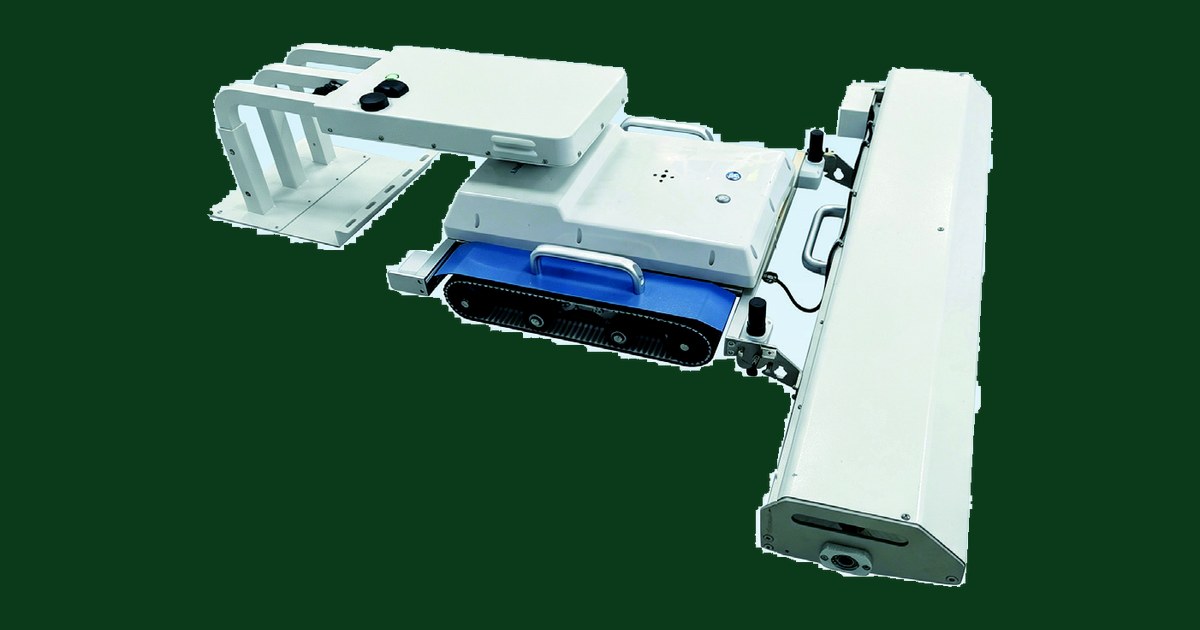
SiRay Energy has added five panel cleaning robots to its product range, opening a third product line alongside battery storage and EV charging. The programme is published in full on the new cleaning section, where the five models are compared side by side.
One machine that works on its own
The ASR102 is the headline. It drives itself along the module rows using dual-channel RTK positioning at centimetre level, cleans at 1200 m²/h, supports night operation and breakpoint resume, and returns to its own charging station between shifts. Nobody has to be on site for the cleaning to happen, which is the point at utility scale.
The autonomous machine ships with a 350 W wireless charging station rated IP66, so the dock does not need to be a precision-machined pad - a 10 mm alignment tolerance is enough. It is specified for arrays up to 10 degrees of inclination.
Four remote-operated machines
The SR series covers the other four slots, and all four are driven by a single-hand remote from up to 300 m away, with ten cruise speed steps and a controller that runs 10 to 15 hours between charges. One operator can therefore supervise a whole block rather than one row.
They differ in the three things that actually decide a purchase: how steep the array is, how wide a row is, and how much weight the crew can handle. The SR102 is the balanced 1500 m²/h machine for flat ground to 15 degrees. The SR103 is the fastest of the single-brush machines at 2000 m²/h and holds 20 degrees. The SR202 fits twin 1.2 m brushes and crosses a 300 mm frame gap. The SR203 is the heavy one at 44.5 kg, with twin 1.4 m brushes, 30 degrees of inclination and a 400 mm gap.
Every SR model supports both wet and dry cleaning, so the same machine covers a desert site and a rooftop. The one limit worth knowing before ordering is that wet cleaning is unavailable at or below 0 ℃ - the water would freeze on the glass.
Where they fit on a plant
The clearest use is the utility-scale ground-mount plant on a fixed cleaning cycle, where throughput and leaving the machine alone both matter. The same range covers mountain and fishery-solar hybrid sites, where slope is the binding constraint, and commercial rooftop arrays, where nobody wants a water hose on the roof and dry sweeping is the practical mode.
All five models are IP65, work from -20 to 60 ℃, stop at a safe wind speed of 13.9 m/s, carry a one-year warranty and a six-year design service life, and are built to GB/T 44264-2024, the Chinese national standard for photovoltaic module cleaning robots.
Full specifications for all five are on the category page, with the individual model pages carrying the full parameter tables.